
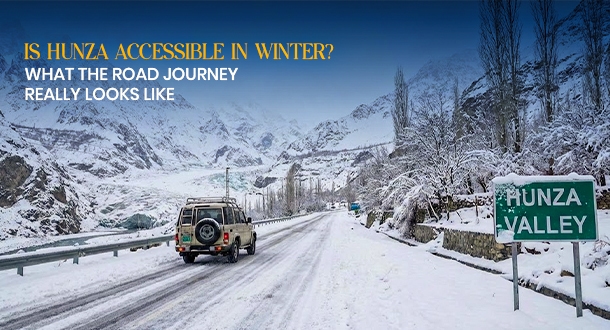
Winter is increasingly becoming one of the best times to visit Hunza Valley. As snow settles over the mountains and tourist crowds fade, travelers are drawn to a quieter, more immersive experience. Still, one question consistently appears in Google searches:
Is Hunza accessible in winter, and are the roads safe to travel?
The answer is reassuring. Hunza Valley remains accessible throughout winter, and with the right preparation, the journey can be both safe and unforgettable.
Is Hunza Valley Accessible in Winter?
Yes, Hunza Valley is accessible during winter via the Karakoram Highway (KKH) — the main road connecting northern Pakistan to the rest of the country. The highway operates year‑round and is actively maintained during colder months.
While snowfall and weather conditions can occasionally slow traffic or cause brief delays, complete road closures are rare and usually short‑lived. Snow clearance and safety measures are prioritized, especially on key sections of the route.
Winter travel to Hunza focuses less on speed and more on timing, awareness, and safety.
Winter Road Conditions on the Karakoram Highway
Travelers heading to Hunza in winter should realistically expect:
- – Reduced driving speeds for safety
- – Snow accumulation at higher altitudes
- – Icy patches during early mornings and evenings
- – Fog in shaded mountain areas
These conditions do not make the journey impossible, but they do require patience, careful driving, and flexibility in travel plans. Daytime travel is strongly recommended for better visibility and road conditions.
What the Journey Looks Like Near Attabad Lake
The approach to Attabad Lake is one of the most visually striking sections of the journey. In winter, the road is lined with snow, the lake edges appear frozen, and the surrounding mountains feel still and dramatic.
Although road conditions remain navigable, this stretch demands attentiveness. The slower pace, however, allows travelers to truly absorb the scenery — turning the drive itself into a highlight of the trip.
Driving in Hunza During Winter: What Travelers Should Know
Winter driving in Hunza requires adjusted expectations:
- – Shorter travel distances per day
- – Preference for daylight driving
- – Value of experienced or local drivers
Local drivers understand how weather affects specific road sections and are better equipped to navigate winter conditions safely. Many travelers find that the slower pace enhances their experience rather than limiting it.
Why Visiting Hunza in Winter Is a Unique Experience
Winter reveals a side of Hunza Valley that peak seasons often hide:
- – Fewer tourists and quieter roads
- – Peaceful villages and undisturbed landscapes
- – A more personal connection with nature
For photographers, couples, and travelers seeking solitude, winter offers an intimate and deeply rewarding version of Hunza.
Choosing the Right Accommodation for Winter Travel
Comfortable accommodation plays a crucial role during winter travel. Staying close to major attractions reduces the need for frequent road travel and ensures warmth and convenience.
Lodges by Baron, located near Attabad Lake, offers an ideal winter base. With cozy interiors, thoughtful design, and proximity to scenic viewpoints, guests can enjoy Hunza’s winter beauty without unnecessary travel challenges.
Is Winter Travel to Hunza Worth It?
Winter travel to Hunza comes with challenges — but it is far from inaccessible. With proper planning, updated road information, and flexible schedules, the journey becomes safe, scenic, and deeply fulfilling.
Snow‑covered mountains, silent valleys, and uninterrupted views create a timeless experience. For travelers willing to embrace winter’s slower rhythm, Hunza offers its most serene and authentic side.
At Lodges by Baron, winter is not an off‑season — it is an invitation to experience Hunza on the mountains’ own terms.